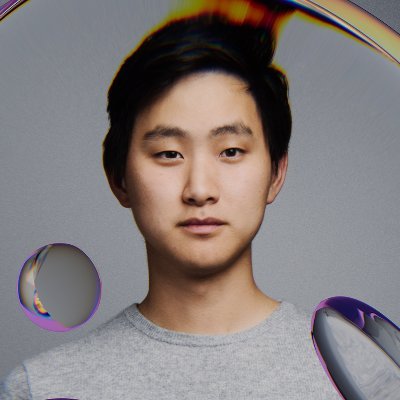
“When Fable was turned off, you could get Fable-level quality for half the price from OpenRouter, because of the way that you could ensemble things together.”
Named in these same posts. This does not imply a comparison or recommendation.
How this is put together
Public posts from the accounts Zeitwire monitors, in the selected window. Findings need three supporting authors and a published source. Announcements can cite one known-affiliated account. This is a sample of the conversation, not a survey or a measure of adoption.
The posts behind the picture
Public source posts
@alexatallah
Known affiliation
The biggest lie in AI is that the future belongs to one winner.
Every technology wave starts with one company promising that one walled garden is all you'll ever need. And every time, market forces and creativity break the walls down.
I cofounded OpenSea and now OpenRouter around the opposite bet: humanity will refuse to be locked in.
Intelligence was never meant to belong to one lab, one model, or one gatekeeper.
The future of AI is open, plural, and yours to choose.
let me tell you something my friend
this is not the time to cancel subscriptions
this is not the time to play it safe
this is not the time to "wait and see"
right now is the time to go fucking ALL IN
>max out your Claude sub
>burn through your ChatGPT plan
>spend all your tokens on OpenRouter and top up AGAIN
it's time to experiment, to build and PRINT a shit ton of money
We've announced OpenRouter's first major APAC partnership: KT Telecom, Korea's largest telecom company.
Around 80 media outlets took part. KT will become a provider of sovereign Korean models on OpenRouter. Launch will be anchored by KT Mi:dm K 3.0 Pro, Upstage Solar and Motif, with plans to expand 10-15 models in 2027.
OpenRouter will power KT's Token Factory, which will be available to KT's enterprise clients.
There is an absolute barrage of inference providers popping up that get to $1M/mo extremely quickly.
This is the rough economics of inference providers:
Even if you rent on-demand B300s at $8/GPU-hr, many open source models (GLM 5.3, Kimi K3, DeepSeek 4.1 Flash / Pro) can get you >$10-20/GPU-hr at reasonable throughputs (100tok/s). DeepInfer from DeepSeek directly shows they can get $38/GPU-hr on off-peak hours. Every chip / model has a different throughput / interactivity curve, but there is a lot of arbitrage between even high rental spot prices and token prices. New chips (Vera Rubins) also change this meaningfully. Your ability to be making gross margin relies on your utilization and how good your stack is.
Gateways like OpenRouter, Vercel and more help solve that problem by aggregating demand to you. May inference providers discount their tokens to get longer term commits too. I've even heard stories of selling back Chinese model tokens to Chinese labs!
One thorn in the economics of these players is that many Chinese open source model labs are now asking for rev share if you're at a certain scale, espp for pre-release access to their models for day 1 support. That further pushes the threshold to be in the money.
The barrier to entry seems low and falling. There are even stories of smaller ones who can "vibe code" a way to stand up OSS models on a cluster they rent. And as a result, we're seeing 10s of such companies pop up almost every week and immediately skyrocketing revenue at low-ish gross margin and raising rounds on the back of that.
Unsurprisingly, because the actual service provided seems commodity, this eventually drives up compute prices and drives down token prices. In theory, it would seem like neoclouds who have the lowest cost of compute and themselves have started inference businesses would win the race to the bottom (Crusoe Coreweave Nebius and GMI all have inference businesses), with larger players (Modal Fireworks Baseten) being second because they are well capitalized to make bigger compute commits cheaply and have demand (high utilization), but the reality is the pie is growing so quickly that even upstarts are absolutely crushing it and growing aggressively (inference dot net, DeepInfra, Wafer, Relace, Morph).
Strategies vary across the board: neoclouds want to serve inference, inference players want to be neoclouds and do higher margin reserved instances / post training, and some want to go heterogeneous hardware or creatively flexible compute constructs.
The risks are: do open source models continue to be competitive? Will their creators rent seek more? Will their shape change compute needs? How do different chips change economics? Who gets compute in a supply crunch?
Below is a aggressive sketch of how gross margin scales with utilization for various models / chip sets.
For now, there are many inference providers and they’re all ripping!
When I joined venture 2 years ago, everyone told me I was foolish to pick Menlo Ventures.
Today, research from the best Stanford professor of venture capital ranks Menlo as #3 in 2026, and #1 for <$25B in AUM, with 50 unicorns and only ~20 investors. These rankings rewards being early, leading, valuation, exits and recency. Rankings are just rankings, but it’s extremely rare for VC firms to change reputations so quickly. It’s a small milestone to celebrate.
Menlo has spent the last 5 years rebuilding the team with people who have built startups and long time investors. We built a culture around sticking to first principles while staying true to our roots of low volume high conviction bets. In the last few years, we have been fortunate to partner with Anthropic, OpenRouter, Lovable, Suno, Fireworks, Gimlet, Higgsfield, Wispr, Modal, Legora, OpenEvidence and they are really the stars of the show. And we’ve missed innumerably more.
However, in venture, you’re only as good as your next deal.
Today, we are launching OpenRouter Armor in beta.
Tool calls allow agents to interact with the world, and regex-based filtering often isn't enough to detect unwanted tool calls.
Armor uses @typesafeai's Jev model to guard against out of policy tool calls before your agent executes them, with better performance than Claude Code's auto classifier at a fraction of the cost.
NVIDIA Nemotron 3.5 Super VL is live on OpenRouter.
An open 120B-A12B multimodal model from @NVIDIAAI for long-running agents that see, reason, and act across text, images, documents, GUIs, and video. 1M context.
Cheeky Muse* is back! Agrippa Zuckerberg @finkd and Euler Wang @alexandr_wang came to the pub to discuss their new frontier model, Muse Wonder.
* made with Muse Wonder 🤝
00:00:24 Muse’s breakout use cases
00:07:28 The model is the product
00:14:35 Muse Wonder
00:24:56 How frontier models are built
00:48:26 Betting $100B
01:07:21 Agentic commerce
01:19:34 OpenRouter
01:20:06 Beyond the smartphone
01:27:00 Funding
01:34:06 Why AI won’t be winner-take-all
01:40:46 Meta Superintelligence Labs (MSL)
02:08:11 Working for Mark Zuckerberg
how to build a top 1% Grok Bot setup in 30 minutes:
- run it on your own machine, that's where it shines: it can run ANY other agent you have, so every model works inside its best harness, and any agent can pick up the files it writes
- connect your email and calendar so it knows your priorities and every deadline coming up
- install /last30days and connect Parallel for way sharper research, no X API needed
- turn on the Cloudflare connector so it can host anything it builds and manage your databases
- create one bot whose only job is deep research, saving everything into a knowledge base that every other bot checks before building anything
- put your bots in groups so they talk to each other and come up with real plans before they build
- give them an OpenRouter key so they can call any model, even the ones you don't pay a sub for
- set up simple routines so Grok Bot uses your computer and whatever else it has access to, and keeps every project moving without you pushing it
The smartest Indians continue to come to build in the US for the simple reason that the economic incentives are far far better.
Perplexity ($20B), Skild ($14B+), Baseten ($13B), Together ($8B), Glean ($8B), Modal ($5B), Rubrik ($25B), Harness ($5B), Blacksmith, Parallel, Greptile, CodeRabbit, Composio, Distyl ($2B), Resolve, Luma, Cartesia, Wispr, dMatrix, Arize and many more - all started by at least one Indian-born founder.
The US is a far easier to raise capital in with far less dilution. Most Indian companies are switching where they're domiciled to get access to the US capital markets. Every single Indian venture firm is trying very hard to invest in the US or risk not participating in the AI race (ironically, the management fees of venture firms are so high in India relatively that this is the one group that net of carry actually has incentive to be in India because they take home well north of a living wage whether or not funds perform do)
While Zomato ($35B now, $8B at IPO) might be the biggest outcome in Indian venture, Cursor ($60B), Reflection (potentially $20B+), World Labs ($8B), OpenRouter ($8B), HuggingFace ($12B) and of course the $1T+ big labs quickly make those outcomes seem small and happen on a much smaller time scale, with much higher IRR.
Engineers at these startups regularly get paid $1M/yr, and make $10M+ on exit. Even in BigTech, it is trivial to pull up levels fyi and see that if you're L6/L7+ with ~10 years of experience, you're making $1M/yr there too. And of course, we all know the slew of Indian CEOs of companies here, not to mention a huge bench of lesser known executives across the board in public and private companies.
I say all this because every time there is a slight immigration hiccup in the US, I hear the online pleas to "build in India", I struggle to understand why most engineers, academics or founders would do that net of desire to be close to family, failure to obtain visa and devout patriotism.
This is not a superiority thing or a US v India thing. The economic incentives at least for technologists to being in the US outweigh India by at least an order of magnitude.
I worked with Claude Code to create 8 short cartoon clips where two characters talk to each other, each scene in a completely different art style.
It uses ElevenLabs for the voices and GPT Image 2 for the art, and Opus 5.5 wrote everything that animates them, including the lip sync, captions, and timing.
First up: a pirate showing his robot butler a treasure map, but it's a takeout menu (16-bit pixel art).
If you want to try this yourself, here are some instructions I had it put together that you can copy and paste into Claude Code or Codex:
---
How to make a short AI dialogue cartoon with Claude Code or Codex:
You need:
- An ElevenLabs API key with Text to Speech + Voices: Read
- An OpenAI key (gpt-image) for the art
- Optional: an OpenRouter key so Gemini can listen to and check the audio
- ffmpeg, Node, Python, Chrome
Save your keys in files (e.g. ~/.config/elevenlabs/api-key), open Claude Code or Codex in an empty folder (in Codex, allow network access), and paste:
Make me one ~30 second animated dialogue video (1920x1080 MP4).
Characters: [your choice]
Situation: [your choice]
Art style: [your choice]
Write a funny 6-8 line back-and-forth with a punchline. Keys are in ~/.config/*/api-key; never print them.
1. Voices: search the ElevenLabs voice library, audition 3-4 voices per character on a real line, and have Gemini (via OpenRouter) pick the best fit.
2. Speech: eleven_v3 with-timestamps, one request per line, with an acting tag like [exasperated]. Use curl.
3. Audio: trim lines using both the timestamps and the waveform (so nothing is clipped and there's no dead air), fit to 30s, add quiet ambience, and compute a per-frame loudness envelope per character.
4. Art: one 16:9 scene with both characters facing each other, mouths closed. Then one edit per character: "change ONLY their mouth to open mid-word."
5. Mouths: diff each edit against the scene to cut out a feathered mouth overlay.
6. Render: canvas page + Puppeteer + ffmpeg. Show a mouth overlay when that character is loud. Word-synced captions styled to match the art. One fixed shot, both characters always visible, no camera moves, and no black first frame.
7. QA: have Gemini check the audio against the script, fix issues, and check test stills before the full render.
Keep all working files in a source/ folder so it can be re-rendered later.
Step 5 Preview from @StepFun_ai hit #1 on OpenRouter Trending, a day after launch.
It's available in Kilo Code, Cline, Hermes Agent, and OpenCode. Keep your workflow and just switch models.
I've tested the model.
It’s a great model and has some nice properties.
I've been using it as a coding agent since early access.
It checks its own work and stops when the task is done. I would use it for long agent runs that I don't watch closely.
StepFun built it for real engineering work. That covers fixing bugs in unfamiliar codebases, implementing features across files, and refactoring, with changes that run and pass checks.
Frontend is the other big focus. You can give it a screenshot, a mockup, or a PRD, and it can return a working web page. It can also build a playable browser game from a set of assets.
Beyond code, it reads annual reports and operating data and turns them into financial reports, editable spreadsheets, and slide decks.
The context window is 1M tokens, with up to 1M output tokens. That is enough for large codebases and long multi-step tasks.
Under the hood, Step 5 Preview is a sparse MoE with 600B total parameters and 27B active per token.
Open weights are coming on Oct 15. Very much looking forward to its release.
DeepMind researcher @iamtrask argues AI may be heading for its mainframe-to-PC moment, with networks of narrow models replacing one giant model at the center:
"There's a growing body of folks who disagree with the mainstream belief on where AI is headed. One set of ideas says the scaling laws imply a smaller number of larger and larger models at the frontier. There is both a theory and some empirical observations that are really threatening that belief."
"We're seeing this up pressure on capability coming from ensembling research and this down pressure on price coming from routing research."
"When Fable was turned off, you could get Fable-level quality for half the price from OpenRouter, because of the way that you could ensemble things together."
"Instead of a mainframe computing-like AI ecosystem, we're gonna get something that looks more like the PC and the internet. A general network of narrow models."
@GoogleDeepMind @openminedorg
FULL INTERVIEW: Andrew Trask says AI won't end with one giant model. He expects millions of models, ensembled and routed per prompt, to beat any single frontier model on quality and price, which would make AI look more like the PC and the internet than the mainframe.
@iamtrask is a senior research scientist at @GoogleDeepMind and the founder of @openminedorg, which helped run the first double-blind evaluation of a frontier model. He joined @theojaffee to lay out who actually gets to audit the labs:
00:40 why embedded evaluators aren't enough
03:54 the "evil EAs" criticism of eval orgs
05:21 why labs only call people they already trust
08:22 a day in the life of an independent evaluator
10:10 how many evaluators belong inside the labs
12:09 will models just game the evals
13:42 the first double-blind eval on a frontier model
15:53 OpenAI's math release and sandboxes with no holes
20:40 why defining what's good could become a job
22:14 the case against one giant model winning
24:32 the proof from OpenRouter and Sakana
Own your personal agent, folks.
Just built my own little personal agent with @pidotdev's Pi Durable.
I wanted to see how quickly I could build an OpenAI dots clone with open-source tools.
I am amazed at how quickly I got this off the ground.
It's proactive.
It keeps working when you're not watching. It remembers you, runs jobs on a schedule, waits for your approval, and uses its own computer.
Pi Durable makes that possible.
Every step is checkpointed. I can kill the process mid-task, and My Pi picks up right where it left off.
Memory lives in durable documents. What My Pi learns about me in one Space survives a crash and carries over to every other Space.
Approvals are durable too.
It also has its own computer. Each Space gets a full Linux desktop that My Pi controls with screenshots, mouse, and keyboard.
The model runs through OpenRouter, so I can swap models without changing anything else. That's all configurable however you like it.
If you've been wanting your own personal agent, now is a great time to build one.
I am building this as an experimental ground where I can test new ideas and experiment deeply with proactive personal agents. But I plan to open-source it after testing it a bit and adding more interesting primitives.
The goal is to make it customizable and easy to build on, so others can experiment with their own personal agent functionalities.
Stripe has reportedly spent ~$9.6B+ acquiring Bridge, Metronome & OpenRouter, plus an undisclosed amount for Privy.
› Bridge ($1.1B) for stablecoin infrastructure
› Privy (Undisclosed) for crypto wallets
› Metronome (~$1B) for usage-based billing
› OpenRouter (~$7.5B+) for AI model routing
John Collison (@collision) explains Stripe’s M&A strategy:
Space Bunny Alpha's stealth period has ended 🐰
Thank you to everyone who put it through its paces and shared feedback. It helped shape the final model.
The model behind it will be revealed soon. Stay tuned.
NEW: Stripe Co-Founder John Collison (@collision) says AI agents will completely rewire internet commerce.
@stripe processed $1.9T in 2025, up 34%. Now the company is rebuilding for an internet where AI agents, not humans, increasingly transact.
“Instinct is real, Muse is real. All these things are real.”
“Computer use is the ultimate backwards compatibility layer for the real world.”
I sat down with John at @browserbase Navigate to talk agentic commerce, computer use, cybersecurity, how Stripe is rebuilding for AI & why Stripe considers 2026 the beginning of the “singularity epoch.”
John sees AI already showing up in new company creation. Stripe is seeing its highest rate of new firm creation in recent memory, while its 2026 Atlas cohort is tracking at 5x the revenue of the 2025 class.
We also cover Stripe’s recent acquisitions:
› Bridge + Privy, bringing crypto-native infrastructure & talent
› Metronome, usage-based billing for the AI era
› OpenRouter, routing across multiple AI models as inference spend & model competition explodes
Browserbase is building the infrastructure for this shift, giving AI agents cloud browsers to navigate the existing web & take actions across it.
𝐓𝐈𝐌𝐄𝐒𝐓𝐀𝐌𝐏𝐒
(00:00) Stripe’s $1.9T & Rebuilding for AI
(00:31) Why Agents Will Replace Web Forms
(02:20) How AI Rewires Commerce & Product Discovery
(04:40) More Cyberattacks?
(06:49) Why Stripe Says the Singularity Started in 2026
(09:29) Stripe Is Rebuilding Its APIs for AI Agents
(11:38) Why Stripe Bought Bridge, Privy, Metronome & OpenRouter
(15:12) When Stripe Builds vs. Buys
(16:55) How AI Is Changing Stripe Internally
(20:39) How John Keeps Up With AI
(23:28) The Coming 'Good Bot' vs. 'Bad Bot' Problem
(24:53) 17 Years of Lessons Building Stripe
.@OpenRouter co-founder Alex Atallah thinks decision models like Jev could be the alignment layer for agents:
"One of the cool potential applications of Jev and other decision models like it is going to be alignment: checking to see if a tool call or an agent-to-agent communication is aligned."
"There's just so many tool calls. You really need a cheap, fast model if you're going to block something like that... We have a little prototype running internally at OpenRouter."
"Imagine looking at the system prompt and the current tool call, and asking: is this aligned with the original agent's system prompt, and with extra guidelines we didn't tell the agent about?"
"Say you have agents instructed to red team a new product. They should not access the internet, and if they ever do, they should stop right away. But you might not want to explain that to them. You want them to act like bad actors."
"So having another model check every single tool call, to see if it's aligned with something that wasn't in the system prompt, makes sense. And then structural safeguards too... I think companies are probably going to explore a combination of those."
@alexatallah @amasad