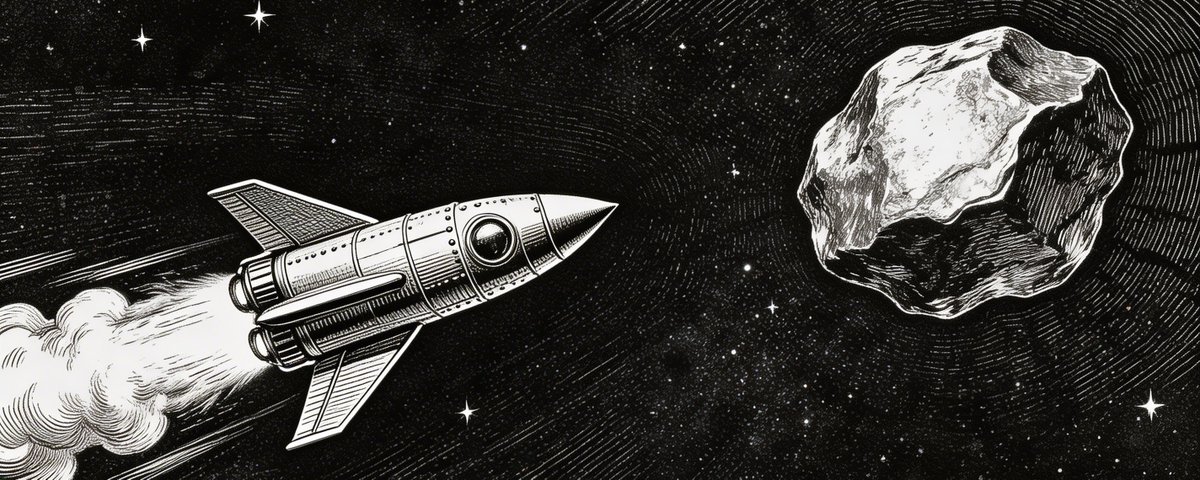
The most profitable platinum mine on Earth - in South Africa - runs at about 14% gross margins. @MattGialich of @AstroForge thinks the company can mine platinum group metals (PGMs) at at a gross margin of 90%. They just have to go to space to do it.
The plan: Send a 440-pound spacecraft 10 million miles across the cosmos, magnetically dock it to a chunk of rock and metal hurtling through space, blast it with lasers, and then fly just the PGMs back to Earth.
No astronauts. No ground crew. Just robots, exploring the solar system beyond our Earth-Moon region.
Matt joined @Jason and @Lons on TWiST to break down the math, the next mission, why PGMs are so important, and how DeepSpace-2 is going to change the future.
Watch TWiST Live every Monday, Wednesday, and Friday on X and YouTube, or subscribe on Apple Podcasts and Spotify.
DeepSpace-2: The Mission
DeepSpace-2 essentially looks like a large box. It's hitching a ride to space on a @SpaceX Falcon 9 rocket launching in November 2026.
Ridesharing as a secondary Falcon 9 payload is, of course, the key to making AstroForge's plan profitable. But while Falcon 9 is headed to the Moon, DeepSpace-2 will break off at some point and set its trajectory toward asteroid 2022 OB5.
This asteroid, which passed by the Earth in August 2022, is believed to be an M-type, or largely composed of metal. AstroForge believes it's potentially viable for mining.
Because M-type asteroids are largely composed of iron, they're magnetic. AstroForge can take advantage of this, essentially attaching their spacecraft to the asteroid like a fridge magnet.
WATCH THE FULL EPISODE
DeepSpace-2 will (if all goes well) autonomously match the asteroid's velocity and rotation, before “docking” with it using magnetic anchors. (Gialich goes into some detail on this during an appearance on “The Shawn Ryan Show.”)
So in reality, it's more like a craft docking with the International Space Station than crash landing on an asteroid, as we've seen in Hollywood films like
Once attached, DeepSpace-2 will use lasers to vaporize a portion of the asteroid's surface. On-board refinery technology uses more magnets to separate condensed particles of iron and other metals from the valuable (and helpfully non-magnetic) PGMs.
For now, AstroForge is not attempting to actually return anything back to Earth. They're going to have DeepSpace-2 test its samples and analyze the asteroid every week, for as long as it keeps functioning. This will let them know if 2022 OB5 is worth a return trip, or if they should start prospecting for a new M-type asteroid.
Going for the Platinum
So why go to all this trouble for PGMs, which already exist here on Earth?
Platinum group metals are in everything: chips (iridium crucibles melt the silicon), LCD and OLED screens (three of the six PGMs), cancer therapies, catalytic converters, and beyond. As Matt puts it, you touch some every single day.
The U.S. has zero domestic supply, and the world's top two producers of PGMs are South Africa and Russia. As well, iridium - critical for hydrogen fuel cells - could be depleted within a decade. Meanwhile, a single 500-meter asteroid contains roughly 175x the world's annual platinum output.
But beyond these immediate concerns, it's worth pausing to consider what COULD happen if we suddenly had a massive influx of fresh PGMs from outer space. As Gialich points out, aluminum was once a highly specialized and hard-to-obtain material, that was more valuable than silver.
WATCH THE FULL EPISODE
In 1886, two 22-year-olds working independently on different continents both discovered that, by dissolving aluminum oxide in molten cryolite and then running an electric current through it, they could produce pure aluminum.
That caused a massive drop in price, moving aluminum from $12 a pound to ultimately more like 30 cents. By the 1890s, aluminum was frequently found in everyday household items. By WWI, they were making planes out of it. Perhaps if we had a steady supply of PGMs from space rocks, the same things would happen to platinum, iridium, and rhodium.
Doing the Math
DeepSpace-2, from construction through launch, will cost an estimated $10.4 million. If successful, each mission could return up to 1,000 kg of PGMs, or roughly $105 million at today's commodity prices. As Gialich explained to Jason and Lon, they don't need to strike it platinum-rich on every mission... They can hit one mission in 10 and still break even.
At that kind of margin, it stops looking like a moonshot - or, well, an asteroid shot - and a bit more like a sustainable business.
Also, bear in mind... Though DeepSpace-2 will be the first attempt to dock with an asteroid by a private company, this technology HAS actually worked before.
NASA's OSIRIS-REx mission rendezvoused with asteroid 101955, Bennu, on December 3, 2018, then spent 2 years analyzing the surface to find a suitable sample collection site. On October 20, 2020, the spacecraft finally managed to extract a sample from Bennu, though it nearly sank into the loose asteroid surface.
NASA's mission returned to Earth in September 2023 with 4.29 ounces of Bennu material. Scientists identified 14 of the 20 amino acids that make up proteins in Earth organisms, and all four nucleobases that are the building blocks of DNA!
So AstroForge is not trying to do the IMPOSSIBLE, but replicate this mission in a less costly and more repeatable way.
Stop typing. Dictate with Wispr Flow and send clean, final-draft writing in seconds. Visit wisprflow.ai/twist to get started for free today.